
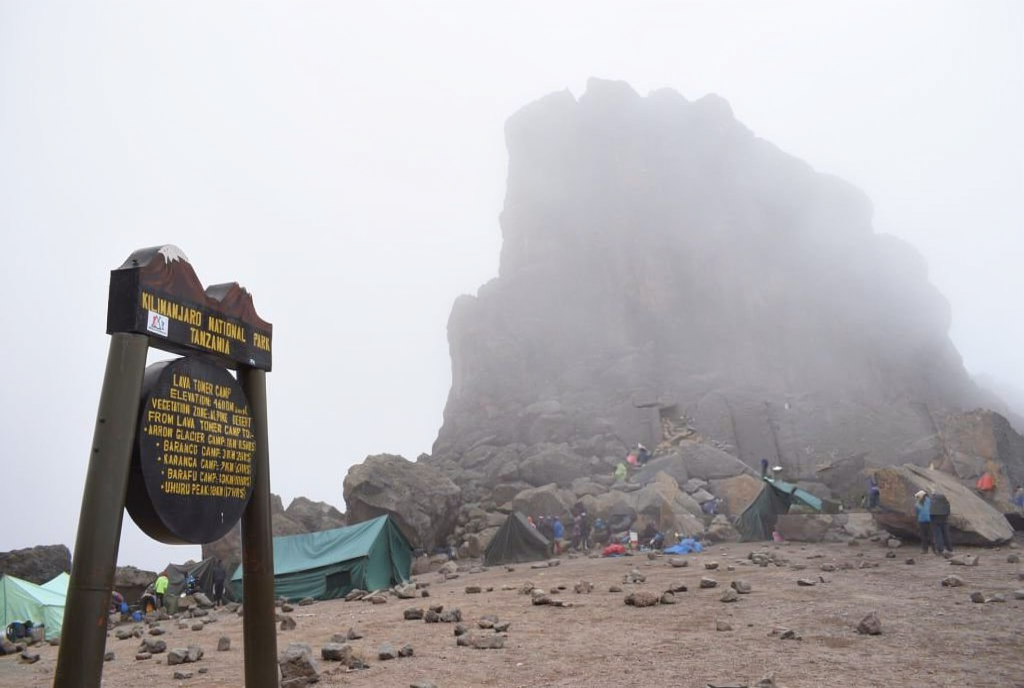
Mount Kilimanjaro and Mount Meru are both located in northern Tanzania, but they provide very different mountain experiences. Kilimanjaro is an internationally recognised high-altitude expedition and one of the world's most famous trekking objectives. Mount Meru is a smaller, steeper, and quieter volcanic trek inside Arusha National Park.
Kilimanjaro is the taller and more demanding altitude objective. Climbers move through rainforest, heath, moorland, alpine desert, and the freezing summit environment before reaching Uhuru Peak.
Mount Meru offers a more concentrated trekking experience. The approach passes through wildlife habitat and montane forest before continuing to the Saddle area and the dramatic crater-rim route to Socialist Peak.
Meru should not be described simply as an easy version of Kilimanjaro. Its lower altitude reduces the overall high-altitude exposure, but the final summit route can feel steep, narrow, rocky, and physically demanding.
The best option depends on whether the traveller wants a world-famous summit, a shorter mountain adventure, wildlife, hut accommodation, acclimatization before Kilimanjaro, or a combination of both peaks.
Kilimanjaro vs Mount Meru at a Glance
Complete Comparison Table
| Comparison | Mount Kilimanjaro | Mount Meru |
|---|---|---|
| Summit elevation | 5,895 m / 19,341 ft | Approximately 4,565 m / 14,977 ft |
| Highest point | Uhuru Peak | Socialist Peak |
| National park | Kilimanjaro National Park | Arusha National Park |
| Typical duration | 5–9 days | 3–4 days |
| Recommended duration | Usually 7–9 days for stronger acclimatization | Four days for a more gradual schedule |
| Route choices | Several official ascent routes | One principal mountain route with itinerary variations |
| Accommodation | Camping, except huts on Marangu | Mountain accommodation centres or huts |
| Main challenge | Extreme altitude and long summit night | Steep crater-rim terrain and rapid altitude gain |
| Technical climbing | Not required on standard trekking routes | Not usually technical, but exposed sections may occur |
| Wildlife | Possible mainly in lower forest zones | Major feature of the lower Arusha National Park section |
| Ranger accompaniment | Licensed mountain guides and crew | Park ranger commonly accompanies trekking groups |
| Crowd level | Moderate to busy on popular routes and seasons | Generally quieter |
| Typical cost | Higher because of duration, fees, and larger crews | Lower because the trek is shorter |
| Best for | Major summit objective and long mountain expedition | Short trek, wildlife, huts, and acclimatization |
| Views of the other mountain | Possible views toward Meru from western areas | Excellent Kilimanjaro views when skies are clear |
Mountain Profiles
Kilimanjaro is a vast volcanic massif composed of Kibo, Mawenzi, and Shira. Uhuru Peak, located on Kibo, is the highest point in Africa.
- Usually five to nine trekking days
- Multiple route choices
- Camping on most routes
- Mountain huts on Marangu
- Greater altitude challenge
- Long and cold summit attempt
- Large expedition support crews
- Internationally recognised achievement
Mount Meru is a dramatic stratovolcano dominating Arusha National Park. Its collapsed eastern wall creates a large horseshoe-shaped crater and striking summit ridge.
- Usually three or four trekking days
- Quieter mountain environment
- Mountain-hut accommodation
- Wildlife-rich lower slopes
- Steep crater-rim summit route
- Views toward Kilimanjaro
- Useful acclimatization trek
- Lower overall trip cost
Altitude Comparison
Kilimanjaro Altitude
Kilimanjaro reaches 5,895 metres, placing climbers in an extreme high-altitude environment where oxygen availability is considerably lower than at sea level.
- Higher risk of altitude-related symptoms
- Longer acclimatization schedule recommended
- Very cold summit environment
- Greater recovery demands
- Higher sleeping elevations on several routes
Mount Meru Altitude
Mount Meru reaches approximately 4,565 metres. This is lower than Kilimanjaro but still high enough to cause altitude illness in susceptible climbers.
- Shorter altitude exposure
- Rapid gain over three or four days
- Cold summit conditions
- Headache and nausea remain possible
- Useful preparation, but not guaranteed acclimatization
Which Trek Is More Difficult?
Kilimanjaro is generally more difficult overall because it is higher, longer, colder, and more demanding during summit night. However, Mount Meru can feel steeper and more exposed on the upper crater ridge.
| Difficulty Factor | Kilimanjaro | Mount Meru | More Demanding |
|---|---|---|---|
| Maximum altitude | 5,895 metres | Approximately 4,565 metres | Kilimanjaro Higher |
| Expedition duration | Five to nine days | Three to four days | Kilimanjaro |
| Summit-night duration | Usually very long | Long but generally shorter | Kilimanjaro |
| Steepness | Depends heavily on route | Steep upper ridge sections | Mount Meru in selected sections |
| Exposure | Generally broad trekking trails | Some narrow crater-rim terrain | Mount Meru |
| Cold | Potentially severe near Uhuru Peak | Cold near Socialist Peak | Kilimanjaro |
| Accumulated fatigue | Several consecutive mountain days | Shorter expedition | Kilimanjaro |
| Wildlife awareness | Limited on most trekking days | Important on lower slopes | Mount Meru |
Trek Duration Comparison
Kilimanjaro: Five to Nine Days
The exact duration depends on the selected route. Longer itineraries generally provide more time for acclimatization.
- Marangu: commonly five or six days
- Machame: commonly six or seven days
- Lemosho: commonly seven or eight days
- Rongai: commonly six or seven days
- Northern Circuit: commonly nine days or longer
Mount Meru: Three or Four Days
Mount Meru is usually offered as a three- or four-day trek. Four days normally provides a less compressed program and additional recovery time.
- Day 1: Momella Gate to Miriakamba
- Day 2: Miriakamba to Saddle
- Day 3: Summit attempt and return
- Day 4: Final descent on extended itinerary
Kilimanjaro Route Options
Marangu Route
Five or six days with mountain-hut accommodation and the same general ascent and descent trail.
Machame Route
Six or seven days with camping, varied scenery, and strong acclimatization opportunities.
Lemosho Route
Seven or eight days through the western forest and Shira Plateau.
Northern Circuit
A long itinerary circling Kilimanjaro's northern slopes with quieter trail sections.
Rongai Route
Northern approach with quieter trails and a descent through Marangu.
Shira Route
A high western starting point that later joins the southern circuit.
Umbwe Route
Steep and direct, with limited early acclimatization opportunities.
Custom Extensions
Selected private programs may add crater or acclimatization days.
Mount Meru Trekking Route
Momella Gate to Miriakamba
The Mount Meru trek begins inside Arusha National Park. The lower route may pass through grassland, forest, streams, and areas used by wildlife.
Groups normally walk with park personnel because of the possibility of encountering large animals. The pace may be influenced by wildlife observations and park safety procedures.
The day ends at Miriakamba, where trekkers rest before continuing toward the higher Saddle area.
Miriakamba to Saddle
The second day climbs beyond the dense forest into more open vegetation. Views may include the crater, Ash Cone, Arusha National Park, and Kilimanjaro.
Some itineraries include an acclimatization walk toward Little Meru. The additional ascent should remain controlled because the summit attempt begins during the night.
Saddle to Socialist Peak
Summit day begins before sunrise. Climbers move toward Rhino Point and continue along the crater ridge toward Socialist Peak.
This section is often the most demanding part of Mount Meru. It may include steep ground, loose volcanic material, rocky sections, narrow trail areas, and exposure.
When the weather is clear, the summit and ridge may provide outstanding views of Kilimanjaro, Meru's crater, Ash Cone, and the surrounding plains.
After the summit, climbers descend to Saddle and continue toward Miriakamba or complete the final descent according to the itinerary.
Scenery Comparison
Kilimanjaro Scenery
- Tropical and montane rainforest
- Heather and moorland
- Shira Plateau on western routes
- Lava Tower and volcanic formations
- Barranco Valley and Barranco Wall
- Alpine desert
- Mawenzi views
- Glaciers and summit ice
- Sunrise from the crater rim
Mount Meru Scenery
- Arusha National Park grasslands
- Montane forest
- Waterfalls and streams
- Giant fig trees
- Open heath and moorland
- Horseshoe-shaped crater
- Volcanic Ash Cone
- Steep crater walls
- Views of Kilimanjaro
Which Mountain Has Better Scenery?
Kilimanjaro provides greater ecological variety and the visual drama of glaciers, Mawenzi, the alpine desert, and the roof of Africa. Mount Meru offers a more concentrated volcanic landscape with crater walls, an ash cone, forest wildlife, and some of the best mountain views toward Kilimanjaro.
- Choose Kilimanjaro for multiple climate zones and a high alpine summit environment.
- Choose Mount Meru for volcanic geology, forest wildlife, and crater-rim scenery.
- Complete both for the most comprehensive northern Tanzania mountain experience.
Wildlife Comparison
Mount Meru normally provides the stronger wildlife experience because the trek begins inside Arusha National Park and crosses habitat used by large mammals.
| Wildlife Category | Kilimanjaro | Mount Meru |
|---|---|---|
| Large mammals | Possible on lower slopes, especially western and forest areas, but sightings are unpredictable | Giraffes, buffaloes, zebras, antelope, and other animals may be encountered in the park |
| Primates | Blue monkeys and colobus monkeys may be seen in forest zones | Blue monkeys and colobus monkeys may be seen during the lower trek |
| Birdlife | Diverse forest and mountain bird species | Strong birding potential within Arusha National Park |
| Wildlife supervision | Managed through guide and park procedures | Ranger accompaniment is an important part of the trek |
| Overall wildlife experience | Secondary feature | Major feature Winner |
Accommodation Comparison
Kilimanjaro Camping Routes
Machame, Lemosho, Rongai, Shira, Umbwe, and the Northern Circuit use tented camps.
- Sleeping tents
- Dining arrangements
- Public camp toilets
- Portable toilet options
- Changing camps most days
Kilimanjaro Marangu Huts
Marangu provides shared dormitory-style mountain huts.
- Permanent buildings
- Bunk-style sleeping
- Shared facilities
- No private hotel-style rooms
- Busy communal atmosphere
Mount Meru Huts
Mount Meru uses mountain accommodation centres at Miriakamba and Saddle.
- Permanent mountain structures
- Shared sleeping arrangements
- Basic washroom facilities
- No tent setup required
- Simple mountain comfort
Summit Experience Comparison
Uhuru Peak
Kilimanjaro summit night often begins around midnight from a high camp such as Barafu, Kibo, or School Hut.
- Long ascent in darkness
- Severe cold and possible strong wind
- Loose scree or steep trail sections
- Stella Point or Gilman's Point
- Final crater-rim walk to Uhuru Peak
- Long descent after the summit
Socialist Peak
Mount Meru summit night begins from Saddle and continues toward Rhino Point and the crater ridge.
- Nighttime departure
- Rocky crater-rim terrain
- Steep and exposed sections
- Volcanic crater views
- Kilimanjaro sunrise views when clear
- Descent to Saddle and lower huts
Acclimatization: Should You Climb Meru First?
Mount Meru is often climbed before Kilimanjaro because it provides several days of trekking and sleeping at moderate to high altitude. This can help some travellers become familiar with altitude, mountain routines, equipment, pacing, and recovery.
Altitude Exposure
Meru introduces the body to elevations above ordinary trekking and city environments.
Equipment Test
Boots, socks, poles, layers, hydration systems, and daypacks can be tested before Kilimanjaro.
Mental Preparation
Climbers experience early starts, mountain huts, cold, fatigue, and summit-day pacing.
Guide Feedback
The Meru team can identify pacing, footwear, nutrition, and equipment issues.
Suggested Meru and Kilimanjaro Combination
| Stage | Suggested Activity | Purpose |
|---|---|---|
| Arrival | Arrive in Arusha and complete equipment checks | Travel recovery and preparation |
| Days 1–4 | Four-day Mount Meru trek | Mountain experience and altitude exposure |
| Recovery | One or two nights in Arusha or Moshi | Rest, laundry, nutrition, and equipment adjustment |
| Next Stage | Seven- to nine-day Kilimanjaro climb | Gradual ascent to Uhuru Peak |
| Post-Climb | Safari or Zanzibar extension | Recovery and wider Tanzania experience |
Cost Comparison
Exact prices vary by season, group size, itinerary, park fees, accommodation, operator standards, equipment, transfers, and inclusions. Mount Meru is normally less expensive because it requires fewer days and a smaller expedition structure.
Why Kilimanjaro Costs More
- More park days
- Larger mountain crews
- More meals and supplies
- Camping equipment on most routes
- Greater porter requirements
- Longer guide commitment
- Higher rescue and logistical planning needs
- Pre- and post-climb accommodation
Why Mount Meru Costs Less
- Three- or four-day itinerary
- Shorter guide and crew commitment
- Fewer meals and supplies
- Permanent accommodation centres
- Short transfer from Arusha
- Smaller overall expedition
- Lower equipment requirements
- Easier combination with a short safari
Best Time to Trek
Both mountains can be climbed throughout the year, but drier periods generally provide better trail conditions and clearer views.
| Period | Kilimanjaro | Mount Meru |
|---|---|---|
| January to early March | Generally favourable and often warmer | Good trekking period with possible Kilimanjaro views |
| March to May | Long-rain conditions and muddy trails | Wet forest, slippery ridge, and reduced visibility |
| June to October | Main dry and popular climbing period | Generally favourable, with cooler conditions |
| November | Short-rain conditions may occur | Rain, cloud, mud, and limited mountain views possible |
| December | Variable early conditions, popular holiday departures | Variable weather with increased holiday demand |
Fitness Requirements
Kilimanjaro Fitness
- Several consecutive trekking days
- Five to eight hours of walking on many days
- Long summit ascent and descent
- Cold and reduced sleep quality
- Endurance with a daypack
- Strong recovery between camps
Mount Meru Fitness
- Three or four consecutive trekking days
- Steep forest and ridge climbing
- Long summit morning
- Balance on rocky terrain
- Controlled descending ability
- Comfort with some exposure
Recommended Training
- Begin regular training at least eight to twelve weeks before departure.
- Complete long walks and hill hikes.
- Train on consecutive weekend days.
- Use stairs or an inclined treadmill when hills are unavailable.
- Strengthen the quadriceps, glutes, calves, hips, and core.
- Practise controlled downhill movement.
- Train with the planned boots and socks.
- Use trekking poles during long hikes.
- Carry a realistic daypack.
- Test rainwear, insulated layers, and hydration equipment.
Safety Comparison
Altitude Illness
A significant concern on both mountains, with greater exposure and elevation on Kilimanjaro.
Weather
Rain, wind, cold, cloud, and sudden changes can affect both treks.
Terrain
Kilimanjaro has varied route conditions, while Meru includes steep crater-rim terrain.
Wildlife
Wildlife safety is especially important on Mount Meru's lower slopes.
Guide Decisions
Guides may alter the pace, stop an ascent, or arrange descent when safety requires it.
Insurance
Coverage should include trekking at the maximum altitude and appropriate emergency evacuation.
Packing Comparison
| Equipment | Kilimanjaro | Mount Meru |
|---|---|---|
| Trekking boots | Essential | Essential |
| Trekking poles | Strongly recommended | Strongly recommended |
| Waterproof jacket and trousers | Essential | Essential |
| Insulated summit jacket | Heavy cold-weather layer required | Warm insulated jacket required |
| Cold-rated sleeping bag | Required on most programs | Required unless clearly supplied |
| Headlamp | Essential for summit night | Essential for summit night |
| Warm gloves | Heavy summit gloves recommended | Warm gloves required |
| Gaiters | Useful in mud, rain, snow, and scree | Useful in mud and loose volcanic terrain |
| Daypack | Usually carries personal daytime needs | Usually carries personal daytime needs |
| Wildlife equipment | Binoculars optional | Binoculars useful on lower slopes |
Advantages and Disadvantages of Kilimanjaro
Advantages
- Highest mountain in Africa
- Internationally recognised achievement
- Several route choices
- Multiple ecological zones
- Glaciers and high-alpine scenery
- Longer acclimatization options
- Strong expedition atmosphere
- Easy combination with safari or Zanzibar
Disadvantages
- Higher overall cost
- Greater altitude risk
- Longer time commitment
- Very cold summit night
- Popular routes can be busy
- Several nights of camping on most routes
- Greater accumulated fatigue
- Summit success is never guaranteed
Advantages and Disadvantages of Mount Meru
Advantages
- Shorter three- or four-day trek
- Lower total cost
- Quieter mountain environment
- Excellent volcanic scenery
- Wildlife-rich lower slopes
- Mountain-hut accommodation
- Views toward Kilimanjaro
- Useful acclimatization before Kilimanjaro
Disadvantages
- Rapid elevation gain
- Steep summit terrain
- Exposed crater-rim sections
- Fewer route choices
- Wildlife may affect pace and logistics
- Summit views depend on cloud
- Less internationally recognised
- Still requires serious preparation
Which Mountain Is Better for Beginners?
Mount Meru may appear more suitable because it is lower, shorter, and uses huts. However, its steep upper ridge and quick ascent can challenge inexperienced trekkers.
Kilimanjaro can also be appropriate for beginners when they select a gradual route such as an eight-day Lemosho, nine-day Northern Circuit, or seven-day Machame itinerary and prepare properly.
Choose Mount Meru
When you want a shorter first mountain, hut accommodation, wildlife, and lower cost.
Choose Kilimanjaro
When Africa's highest summit is your main goal and you can commit to a long acclimatization itinerary.
Choose Both
When you have enough time, budget, fitness, and interest in a complete Tanzania mountain program.
Which Mountain Is Better for Experienced Trekkers?
Experienced trekkers may appreciate Mount Meru's steep volcanic ridge and quieter atmosphere. Kilimanjaro provides the greater altitude objective, longer expedition, and wider selection of route styles.
- Choose Northern Circuit for a long and remote Kilimanjaro journey.
- Choose Lemosho for western scenery and a gradual itinerary.
- Choose Mount Meru for a short but concentrated volcanic challenge.
- Complete Meru followed by Kilimanjaro for back-to-back mountain objectives.
Who Should Choose Kilimanjaro?
- Travellers whose main goal is Africa's highest summit
- Climbers with seven to nine available trekking days
- People prepared for camping or shared mountain huts
- Travellers seeking several ecosystems
- Climbers comfortable with a larger expedition team
- People seeking a major personal or fundraising challenge
- Travellers combining trekking with safari or Zanzibar
Who Should Choose Mount Meru?
- Travellers with only three or four trekking days
- Climbers seeking a quieter mountain
- People interested in wildlife and volcanic geology
- Travellers who prefer permanent mountain accommodation
- Climbers preparing for Kilimanjaro
- Visitors based in Arusha
- Travellers seeking a lower-cost mountain adventure
Who Should Climb Both?
- Travellers with at least two available weeks
- Climbers wanting additional altitude exposure
- People interested in both wildlife and high-alpine landscapes
- Trekkers who recover well after Mount Meru
- Travellers with flexible budgets
- Photographers seeking contrasting mountain environments
- Visitors planning an extended northern Tanzania journey
Frequently Asked Questions
Is Kilimanjaro higher than Mount Meru?
Yes. Kilimanjaro reaches 5,895 metres, while Mount Meru reaches approximately 4,565 metres.
Which is more difficult, Kilimanjaro or Mount Meru?
Kilimanjaro is generally more difficult overall because it is higher, longer, and colder. Mount Meru may feel steeper and more exposed on its upper ridge.
How many days does Kilimanjaro take?
Standard itineraries normally require five to nine days, depending on the route.
How many days does Mount Meru take?
Mount Meru is normally climbed over three or four days. Four days provides a less compressed itinerary.
Can beginners climb Mount Meru?
Yes, but beginners should train properly and understand that the summit ridge can be steep, rocky, and exposed.
Can beginners climb Kilimanjaro?
Yes. Many beginners climb Kilimanjaro using longer routes, professional guides, suitable equipment, and structured preparation.
Is Mount Meru a technical climb?
Standard Mount Meru trekking does not normally require technical mountaineering equipment, but the upper ridge involves steep and exposed terrain.
Is Kilimanjaro a technical climb?
Standard Kilimanjaro routes are non-technical treks. The main challenges are altitude, weather, cold, duration, and endurance.
Which mountain has more wildlife?
Mount Meru normally provides the stronger wildlife experience because the trek begins within Arusha National Park.
Why is a ranger required on Mount Meru?
The lower slopes pass through wildlife habitat where large animals may be encountered. Groups must follow park safety procedures.
Can I see Kilimanjaro from Mount Meru?
Yes, Kilimanjaro may be visible from Mount Meru when cloud and weather conditions are favourable.
Can I see Mount Meru from Kilimanjaro?
Mount Meru may be visible from Kilimanjaro's western and southern areas when the atmosphere is clear.
Does Mount Meru have huts?
Yes. Trekkers normally use mountain accommodation centres at Miriakamba and Saddle.
Does Kilimanjaro have huts?
Only the Marangu Route uses permanent mountain huts. Other main routes use tents.
Which mountain is cheaper?
Mount Meru is generally cheaper because it requires fewer days, less food, and a smaller overall expedition.
Which mountain is less crowded?
Mount Meru is generally quieter than Kilimanjaro's popular routes.
Which mountain has better acclimatization?
Long Kilimanjaro routes provide more gradual altitude exposure. Mount Meru is shorter but can provide useful pre-acclimatization before Kilimanjaro.
Should I climb Mount Meru before Kilimanjaro?
It can be beneficial for altitude exposure, fitness, and equipment testing, but it does not guarantee successful acclimatization on Kilimanjaro.
How much rest should I take between Meru and Kilimanjaro?
Many itineraries allow one or two recovery nights, depending on health, fatigue, logistics, and guide advice.
Can I climb both mountains in one trip?
Yes. Mount Meru can be followed by Kilimanjaro, with appropriate recovery between the climbs.
Which mountain has the better summit view?
Kilimanjaro offers high-altitude views from Africa's highest point. Mount Meru offers dramatic crater views and a striking view toward Kilimanjaro when clear.
Which mountain has glaciers?
Kilimanjaro has summit glaciers and permanent ice features. Mount Meru does not have comparable glaciers.
Which mountain has more route choices?
Kilimanjaro has several official climbing routes. Mount Meru has one principal summit trail with itinerary variations.
Is altitude sickness possible on Mount Meru?
Yes. The summit is above 4,500 metres, and altitude symptoms can develop during the rapid ascent.
Is altitude sickness more common on Kilimanjaro?
Kilimanjaro reaches a considerably higher elevation and presents a greater altitude challenge, especially on short routes.
What is the Mount Meru summit called?
The highest point is commonly known as Socialist Peak.
What is the Kilimanjaro summit called?
The highest point is Uhuru Peak at 5,895 metres.
What is Little Meru?
Little Meru is a secondary peak that may be visited from the Saddle area as an acclimatization excursion.
What is Rhino Point?
Rhino Point is a prominent point along the upper Mount Meru summit route.
When is the best time to climb both mountains?
January to early March and June to October are commonly selected because conditions are generally drier.
Can both mountains be climbed during the rainy season?
Yes, but expect mud, slippery terrain, cloud, rain, and reduced visibility.
Which trek is better for photographers?
Kilimanjaro offers glaciers and multiple ecological zones, while Mount Meru offers wildlife, crater geology, and views toward Kilimanjaro. Both are excellent for different reasons.
Which trek is better for a short Tanzania visit?
Mount Meru is easier to fit into a short itinerary because it usually requires three or four trekking days.
Which trek is better for a major personal challenge?
Kilimanjaro is normally selected for a major summit goal because it is Africa's highest mountain.
Can I climb either mountain independently?
Mountain arrangements must be made through an appropriately registered operator and authorised guide structure.
Do porters work on both mountains?
Support arrangements depend on the itinerary and operator. Kilimanjaro generally requires a larger mountain crew because of its longer duration and camping logistics.
Which mountain should I choose?
Choose Kilimanjaro for the highest summit and a longer expedition. Choose Mount Meru for a shorter, quieter, wildlife-rich volcanic trek. Choose both for the complete experience.
Choose Kilimanjaro, Mount Meru, or Both
Plan your Tanzania mountain adventure according to your available days, fitness, altitude experience, budget, preferred accommodation, scenery interests, wildlife priorities, and safari or Zanzibar plans.
Request a customized Kilimanjaro itinerary, Mount Meru trek, or combined Meru and Kilimanjaro package with airport transfers, accommodation, park arrangements, guides, crew, meals, equipment support, safety planning, and optional safari extensions.
Plan Your Mountain Trek Request a Custom Itinerary


.png)
.png)
.png)


.jpg)
.jpg)
.jpg)

