
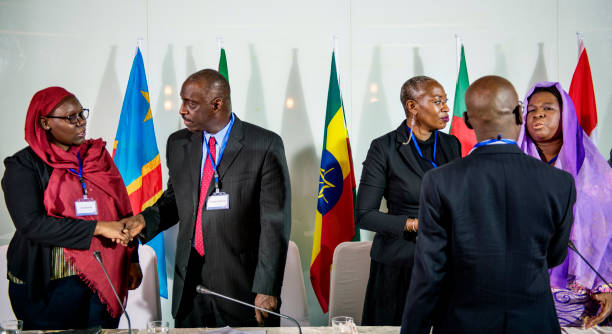
Understanding the Richest Politicians in Africa
Searching for the top 10 richest politicians in Africa often produces confident lists with large dollar figures. However, a reliable ranking requires comparable information about personal assets, ownership shares and liabilities at a common valuation date.
The public information available for political figures varies considerably. A businessperson who entered politics may have documented company holdings, while another person's published financial information may consist mainly of an asset declaration. Neither should be compared carelessly with a rumor about family wealth.
How to read this article: The following ten profiles examine figures relevant to political-wealth discussions. Their order is editorial, not a verified wealth ranking. No current personal net-worth figure is assigned where comparable evidence has not been established.
Ten Profiles and the Evidence Questions They Raise
| Name | Country | Category or Background | Main Evidence Question |
|---|---|---|---|
| Aziz Akhannouch | Morocco | Business and political career. | How much of a family-linked valuation belongs personally to him? |
| Mohammed Dewji | Tanzania | Businessman and former member of parliament. | How are business holdings valued at the stated date? |
| Naguib Sawiris | Egypt | Businessman with historical political involvement. | Does the chosen definition include political organizers outside elected office? |
| Cyril Ramaphosa | South Africa | Political leadership and a documented business career. | Which holdings remain attributable to him at the valuation date? |
| Uhuru Kenyatta | Kenya | Former president. | Which reported assets are personal and which belong to relatives? |
| Atiku Abubakar | Nigeria | Former vice president and political figure. | Which business interests have verifiable ownership and valuation? |
| Peter Obi | Nigeria | Former governor with a business background. | What current evidence supports a personal wealth figure? |
| Moïse Katumbi | Democratic Republic of the Congo | Former provincial governor and political figure. | Can reported business values be attributed to personal ownership? |
| William Ruto | Kenya | Political leader. | Are wealth claims supported by dated declarations or ownership records? |
| Mohammed VI | Morocco | Monarch, included as a separate category. | Are personal, royal-family and state assets being distinguished? |
Business Backgrounds and Political Careers
Aziz Akhannouch: The Importance of “And Family”
Forbes Middle East's 2026 profile identifies Aziz Akhannouch and family and describes his majority ownership of Akwa Group. The wording matters: a valuation presented with family attribution should not automatically be treated as one individual's personal assets.
A careful comparison would identify the relevant ownership shares and the valuation date. It would also explain whether the publisher's estimate includes family interests beyond the politician himself.
Mohammed Dewji: A Former Politician with a Business Career
The World Economic Forum identifies Mohammed Dewji as a businessman, philanthropist and former politician, and records his parliamentary service from 2005 to 2015. This makes him relevant when a list explicitly includes former officeholders.
It also shows why the definition of “politician” matters. A ranking restricted to current elected officials would require different eligibility rules from one covering anyone who previously held public office.
Naguib Sawiris: Business Wealth and Historical Political Involvement
Naguib Sawiris appears in Forbes business coverage and historical political-wealth features. His inclusion illustrates the distinction between a businessperson with political involvement and a person holding elected government office.
The profile should therefore explain the category rather than implying that all individuals in the article have equivalent public roles. Business wealth should be supported by the business valuation source, not inferred from political influence.
Cyril Ramaphosa: A Career Across Public and Private Sectors
South African official biographies document Ramaphosa's political and business background. Those records establish career history, but they do not by themselves provide a complete current personal balance sheet.
Historical business success is relevant context. Assigning a current dollar figure requires additional evidence about retained assets, ownership changes and liabilities.
Family Assets and Personal Wealth
Uhuru Kenyatta: Read Family Reporting Carefully
ICIJ's 2021 Pandora Papers investigation discussed offshore holdings associated with members of the Kenyatta family. The reporting should be read with its historical date and family attribution intact.
It does not justify assigning every relative's asset to Uhuru Kenyatta or claiming that the reported holdings represent his complete current net worth. It also does not establish a continent-wide ranking.
Mohammed VI: A Monarch Is a Separate Category
Mohammed VI is a monarch rather than an elected politician. Articles that include royal figures should make this distinction visible to readers.
Royal-family wealth, personally owned business interests and state property are different categories. National resources, official residences and public budgets cannot automatically be treated as the monarch's private assets.
Other Political Profiles: Avoid Unsupported Dollar Totals
Atiku Abubakar and Peter Obi
Atiku Abubakar and Peter Obi are established Nigerian political figures. Reporting also provides business context for their careers, but that does not establish a comparable current net-worth ranking.
For any proposed figure, check the original source and determine whether it refers to an individual, a company or a broader family interest. A business role does not necessarily mean the person owns the entire organization.
Moïse Katumbi and William Ruto
These profiles require the same evidence standards. Political prominence, campaign activity and public discussion of investments are not sufficient to establish retained wealth.
A dated asset declaration or documented ownership record can support a specific claim. It should not be expanded into a complete fortune estimate unless the methodology explains what has been included and excluded.
What Different Financial Sources Can Establish
| Evidence | What It Can Show | What It Does Not Automatically Show |
|---|---|---|
| Asset declaration | Assets disclosed under the applicable reporting rules. | A complete independent valuation of every asset and liability. |
| Company ownership record | A documented shareholding or ownership relationship. | The current market value of the person's entire fortune. |
| Published wealth estimate | A publisher's valuation under a stated method. | An audited personal financial statement. |
| Family-business reporting | Assets or interests linked to a wider family. | Exclusive ownership by one politician. |
| Historical investigation | Evidence relevant to the period investigated. | An automatically updated valuation. |
| Social-media claim | A circulating assertion. | Reliable proof without supporting records. |
Common Errors in Political Wealth Rankings
| Claim | Problem | Better Approach |
|---|---|---|
| A country's resources belong to its leader. | Confuses public assets with private ownership. | Require evidence of a personally owned asset. |
| A politician owns a company, so all revenue is personal wealth. | Confuses revenue, company value and shareholder equity. | Identify ownership share and subtract relevant liabilities. |
| A relative is wealthy, so the politician has the same fortune. | Misattributes family assets. | Establish individual beneficial ownership. |
| An old estimate is labeled with the current year. | Creates a false impression of fresh research. | Keep the original date visible. |
| Wealth proves corruption. | Financial size alone does not establish misconduct. | Discuss any specific allegation through attributable evidence and legal context. |
Frequently Asked Questions
Who is the richest politician in Africa?
This article does not establish a single verified leader. A defensible answer requires a clear definition of politician and comparable current valuations.
Why are former politicians included?
Many online lists include former officeholders. This article identifies that category so readers can distinguish it from current public office.
Are billionaire lists also political rankings?
No. A billionaire list measures wealth under the publisher's criteria. Political eligibility must be assessed separately.
Can family wealth be used as personal net worth?
Only where the relevant ownership can be attributed. Family totals should retain their family label.
Does missing evidence mean a person is not wealthy?
No. It means this article cannot responsibly assign a comparable figure from the available evidence.