
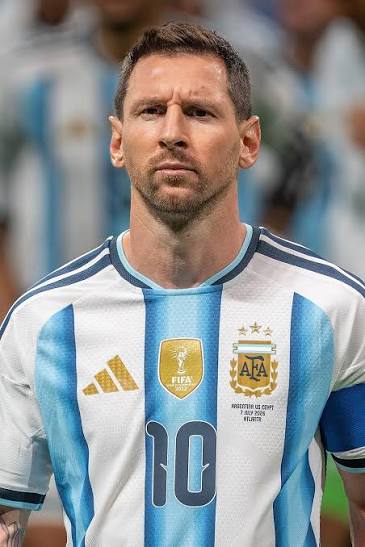
Lionel Messi is an Argentine footballer celebrated for combining prolific scoring with exceptional creativity. His football brings together close control, changes of pace, accurate passing and the ability to make decisive choices in crowded areas.
His story stretches from Rosario and Barcelona’s youth system to European club success, Argentina’s World Cup triumph and his Inter Miami chapter. It is a career that can be understood through records, but also through the way he changes the possibilities available to his teammates.
This profile explores his background, major career chapters, selected achievements and playing style. It also explains how to read football statistics without confusing a historical record with a continuously changing career total.
Who Is Lionel Messi?
Lionel Messi was born in Rosario, Argentina, on 24 June 1987. Inter Miami’s official player profile lists him as a left-footed forward wearing number 10. He turned 39 in June 2026.
The word “forward” describes his position broadly, but it does not capture everything he contributes. He can finish attacks, help create them and receive the ball in areas where a conventional striker might rarely operate.
| Detail | Information | Context |
|---|---|---|
| Common name | Lionel Messi / Leo Messi | Names used throughout official football coverage. |
| Date of birth | 24 June 1987 | Listed on his official Inter Miami profile. |
| Birthplace | Rosario, Argentina | The starting point of his football story. |
| Nationality | Argentine | Represented Argentina internationally. |
| Preferred foot | Left | Important to his passing, dribbling and shooting patterns. |
| Listed club | Inter Miami CF | Official club profile checked on 8 October 2026. |
| Listed position | Forward | His tactical contribution can extend into playmaking areas. |
| Inter Miami shirt number | 10 | Listed by the club. |
Early Development: Rosario to Barcelona
Barcelona’s historical profile records Messi’s youth football at Newell’s Old Boys before he joined Barcelona’s development system at the age of 13. His progression through the club’s youth and reserve levels led to the first team.
This part of his career matters because development is a process. The finished player seen in famous highlights emerged through training, competitive matches and the experience of playing alongside increasingly demanding teammates and opponents.
For young players, the useful lesson is broader than copying a spectacular dribble. Development involves learning when to receive, how to protect the ball, where teammates are positioned and which action helps the team.
Talent and the Learning Environment
Technical ability becomes more effective when it is supported by awareness. A player who can beat an opponent still needs to recognise when passing is the better option. A player who can shoot accurately needs to identify the space in which a shot is possible.
Messi’s football provides a useful example of those skills working together. His technique creates options; his judgement helps select among them.
Lionel Messi’s Barcelona Career
Barcelona’s published career summary credits Messi with 778 appearances, 672 goals and 35 trophies for the club. These figures describe his completed Barcelona chapter, rather than his total career across every team.
The scale is remarkable, but the numbers should be read alongside his role in the attack. A goal records the final scoring action. It does not show every movement or pass that made the opportunity possible.
| Measure | Published Figure | Scope |
|---|---|---|
| Appearances | 778 | Barcelona career summary. |
| Goals | 672 | Barcelona goals, not total career goals. |
| Trophies | 35 | Titles credited in Barcelona’s summary. |
Why His Barcelona Role Was So Influential
Messi could threaten a defence in more than one way. If a defender stepped towards him, space could open for a teammate. If the defender held position, Messi could advance or prepare a shot.
That uncertainty is an important part of attacking football. The most effective player is not always the one who performs the most complicated action. It can be the player who gives the opponent no comfortable choice.
His combination of scoring and creation also made a simple positional description inadequate. Depending on the phase of play, he could resemble a winger, central forward or attacking playmaker.
The Paris Saint-Germain Chapter
Messi’s career continued at Paris Saint-Germain between 2021 and 2023. PSG’s farewell reporting credited him with 32 goals and 35 assists during his time at the club.
This chapter placed him in a different football environment. A player joining another team must adapt to its teammates, positioning and expectations. The same technical strengths can be used in different ways within a different attack.
Assessing the PSG period therefore requires more than comparing it directly with his longest Barcelona seasons. Consider the length of the chapter, role and contribution alongside the results.
| Club | Career Chapter | What It Adds to the Story |
|---|---|---|
| FC Barcelona | Development and long-term first-team career. | A sustained body of scoring, creativity and club achievement. |
| Paris Saint-Germain | 2021–2023. | A new European setting and different attacking partnerships. |
| Inter Miami CF | Joined in 2023. | A new club and competition environment in the United States. |
Lionel Messi at Inter Miami
Inter Miami announced Messi’s arrival in 2023. Its current player page continues to identify him as a number 10 forward.
The move gave supporters another setting in which to watch his football. For analysis, the interesting question is how his receiving positions, passing choices and scoring opportunities fit the team around him.
Current club statistics, availability and fixtures require dated information. A historical biography should not imply that the player will appear in every upcoming match simply because he remains listed by the club.
Lionel Messi and Argentina
Argentina’s national team gave Messi’s career a different kind of significance. Club football provides repeated competition across a season, while major international tournaments concentrate expectations into a short period.
His Argentina story includes difficult finals and later major victories. CONMEBOL’s account identifies Copa América triumphs in 2021 and 2024, while FIFA records Argentina’s World Cup victory in 2022.
These achievements belong to a team. Messi’s influence is central to the story, but a tournament victory also depends on teammates, coaching and execution across several matches.
| Year | Milestone | Significance |
|---|---|---|
| 2008 | Olympic gold medal. | An achievement in Olympic football, distinct from the senior World Cup. |
| 2014 | World Cup Golden Ball. | Individual recognition at the tournament. |
| 2021 | Copa América champion. | A major senior continental title. |
| 2022 | World Cup champion and Golden Ball winner. | Team success and individual tournament recognition. |
| 2024 | Copa América champion. | Another continental triumph with Argentina. |
| 2026 | International farewell against Benin. | The conclusion of his national-team playing chapter. |
The 2022 World Cup Triumph
FIFA’s tournament reporting records Messi lifting the World Cup with Argentina in Qatar and receiving the Golden Ball. FIFA also identifies him as the first player to win the World Cup Golden Ball twice.
The World Cup triumph is an essential part of his biography because it connects individual excellence with the sport’s most prominent national-team prize.
However, a thoughtful profile should not reduce an entire career to one tournament. His club performances, sustained scoring and creative contribution already provided an extensive body of work. The 2022 victory added a defining international achievement.
Golden Ball Versus Golden Boot
Football award names can cause confusion. The World Cup Golden Ball recognises the tournament’s outstanding player, while the Golden Boot concerns goalscoring. They describe different forms of recognition.
| Award | What It Recognises | Important Distinction |
|---|---|---|
| Ballon d’Or | A major individual football award. | Separate from the World Cup Golden Ball. |
| World Cup Golden Ball | Outstanding player at a World Cup tournament. | Not simply the award for most goals. |
| World Cup Golden Boot | Leading tournament goalscorer under the applicable criteria. | A scoring award. |
| European Golden Shoe | European domestic-league scoring recognition. | Separate from Champions League scoring. |
| Team trophy | Success achieved by a team. | Different from an individual award. |
October 2026: Messi’s Argentina Farewell
FIFA and Inter Miami reported Messi’s final international appearance against Benin on 6 October 2026. Argentina won 3–0, and Messi scored during the farewell match.
The distinction between the event date and the date of reporting is useful. Articles published on 7 October describe a match played on 6 October in Argentina.
For readers following his career, this marks a change in how the biography should be written. His Argentina playing career can be discussed as a completed chapter, while his listed club career remains a separate subject.
Lionel Messi’s Major Individual Records
UEFA’s published record guide credits Messi with eight Ballon d’Or awards and six European Golden Shoes. It also lists 474 Spanish league goals, 50 league goals in the 2011/12 season and 129 Champions League goals.
These figures belong to specific categories. Combining them into a single total would double-count goals, because one competition total can sit inside a wider club total.
| Category | Published Figure | How to Read It |
|---|---|---|
| Ballon d’Or awards | 8 | Individual awards, not team trophies. |
| European Golden Shoes | 6 | A separate scoring distinction. |
| Spanish league goals | 474 | League goals rather than all Barcelona goals. |
| 2011/12 Spanish league goals | 50 | A single-season figure. |
| Champions League goals | 129 | Competition-specific career scoring. |
| 2012 calendar-year goals | 91 | Club and Argentina goals combined during that calendar year. |
What Makes Lionel Messi’s Playing Style Distinctive?
The following sections are football analysis rather than additional statistical claims. They explain the actions that make his performances useful to study.
Close Control and Changes of Direction
Messi’s dribbling often involves keeping the ball close enough to change his next action quickly. A defender may prepare for one movement, only for a small touch to create a different angle.
The value of close control is not the number of touches alone. It is the ability to retain several options until the defender commits.
Passing After Attracting Pressure
An attacker can help a teammate by drawing an opponent out of position. Messi’s receiving and dribbling can create that situation before he releases the pass.
Watch the defender as well as the ball. A pass may become possible because the defender moved towards Messi a moment earlier.
Finishing and Shot Selection
Finishing requires recognising the goalkeeper’s position, the defender’s movement and the available angle. Power is only one part of the decision.
When studying a goal, look at the preparation: the first touch, body position and moment of release. Those details often explain why the finish became possible.
| Skill | Visible Action | Football Effect |
|---|---|---|
| Close control | Short touches near defenders. | Preserves the ability to change direction. |
| Change of pace | Acceleration after a slower approach. | Disrupts defensive timing. |
| Body disguise | Preparing one action before choosing another. | Makes the defender’s decision harder. |
| Through passing | Releasing the ball into a teammate’s run. | Turns movement into an attacking opportunity. |
| Combination play | Passing and repositioning. | Creates another receiving angle. |
| Shot selection | Choosing placement, timing and angle. | Uses the opportunity available in that moment. |
Winger, False Nine or Playmaker?
A tactical role describes what a player is asked to do, not only where the lineup graphic places him. Messi’s influence can involve receiving wide, moving centrally or dropping towards midfield.
A false nine begins from a central attacking position but moves away from the defenders to receive and connect play. That movement can create space for teammates running beyond him.
A playmaking role places greater emphasis on progressing the attack and supplying others. A player can contribute in that way while remaining a significant scoring threat.
| Role | Main Starting Idea | Question for the Viewer |
|---|---|---|
| Wide attacker | Receive or begin attacks from a flank. | Does the player stay wide or move inside? |
| False nine | Leave the central forward line to connect play. | Who uses the space created behind the movement? |
| Playmaker | Organise and create attacking opportunities. | How does the player progress the ball? |
Messi and the Debate About Football Greatness
Messi belongs in discussions of football’s greatest players because his career combines scoring, creation and major achievement over a long period. The precise ranking remains a matter of judgement.
Comparisons become more useful when the criteria are stated. Goals, creativity, longevity, tournament performances and team success are different measures. Reasonable observers can give them different importance.
Comparisons with Cristiano Ronaldo, Diego Maradona or Pelé should also recognise different roles, teams and eras. A useful discussion explains the evidence rather than treating personal preference as a settled fact.
| Criterion | What It Examines | Limitation |
|---|---|---|
| Scoring | Goals and scoring consistency. | Does not capture every creative contribution. |
| Creation | Passing and opportunities supplied. | Assist definitions and teammate finishing matter. |
| Longevity | Performance sustained over time. | Needs context about role and competition. |
| Team success | Titles and deep tournament runs. | Depends on the whole team. |
| Individual awards | Recognition under award criteria. | Different awards use different methods. |
| Tactical influence | How the player changes matches. | Requires analysis beyond headline totals. |
Why Messi Statistics Can Differ Between Websites
A statistic is meaningful only when its definition and cutoff date are known. One page may include all competitions, another league matches only. A third may preserve a historical total from the date it was written.
Assist totals can differ because data providers apply different definitions. Appearance totals can also require checking the match categories being included.
For a career profile, use completed historical chapters where possible and date ongoing figures. Avoid describing a changing total as a permanent record without qualification.
| Check | Question | Purpose |
|---|---|---|
| Date | When was the figure updated? | Identifies the cutoff. |
| Team scope | One club, all clubs or Argentina? | Prevents incompatible comparisons. |
| Competition scope | League only or all competitions? | Explains different totals. |
| Match category | Which matches are counted? | Clarifies the statistical definition. |
| Assist method | How does the provider define an assist? | Explains variation between sources. |
| Record claim | What exact category does the record concern? | Avoids overstating the achievement. |
Lessons Young Footballers Can Learn from Messi
Study the decisions behind the highlights. Notice the scan before receiving, the first touch away from pressure and the pass that allows a teammate to continue the attack.
Practise skills at a level appropriate to your development. Close control, passing accuracy and awareness can be trained without trying to reproduce an elite performance immediately.
Football also requires cooperation. The spectacular individual action becomes more useful when it fits the movement of the team.
| Observation | Training Focus | Useful Aim |
|---|---|---|
| Controlled first touch | Receiving from different angles. | Prepare the next action. |
| Awareness before receiving | Checking surrounding positions. | Reduce rushed decisions. |
| Accurate short passing | Passing to a teammate’s useful side. | Help the next action succeed. |
| Change of direction | Simple controlled movement. | Protect the ball and create space. |
| Combination play | Passing and moving. | Create another option. |
| Decision-making | Choosing between pass, dribble and shot. | Improve the team’s opportunity. |
Salary, Endorsements and Net Worth
Readers often search for Lionel Messi’s salary or net worth alongside his football biography. Those financial questions require different evidence from goals and trophies.
Salary, endorsement income and personal wealth are separate categories. Annual earnings do not equal net worth, and an estimated fortune is not an audited account of all assets and liabilities.
This profile does not assign a current net worth or contract value. A financial article should provide a dated source, clear currency and an explanation of what the figure measures.
Frequently Asked Questions About Lionel Messi
Where was Lionel Messi born?
He was born in Rosario, Argentina.
When is Lionel Messi’s birthday?
His date of birth is 24 June 1987.
Which club lists Messi as its player?
Inter Miami CF lists him as a number 10 forward in the official profile checked on 8 October 2026.
How many goals did Messi score for Barcelona?
Barcelona’s published career summary credits him with 672 goals.
How many Ballon d’Or awards has Messi won?
UEFA’s published record guide lists eight.
Did Messi win the World Cup?
Yes. He won the 2022 World Cup with Argentina and received the tournament’s Golden Ball.
Has Messi retired from Argentina?
FIFA and Inter Miami reported his final international appearance against Benin on 6 October 2026.
Does international retirement mean he retired from club football?
No. National-team and club careers are separate. Use current club announcements for any change in his professional status.
Why is Messi considered such a complete attacker?
He combines scoring with dribbling, passing and the ability to create opportunities for teammates.
Where should I check his latest statistics?
Use current club and competition sources, checking the date and scope of each figure.
Sources and Further Reading
- Inter Miami CF: Official Leo Messi Profile
- FC Barcelona: Historical Messi Profile
- Paris Saint-Germain: Messi Farewell Report
- UEFA: Lionel Messi Records
- FIFA: Messi’s Second World Cup Golden Ball
- CONMEBOL Copa América: Messi’s Argentina Career
- Inter Miami: Final International Appearance
- FIFA: October 2026 Argentina Farewell
Source check: 8 October 2026. Historical figures retain their stated scope. Club statistics and player availability can change. Tactical sections provide editorial football analysis.