
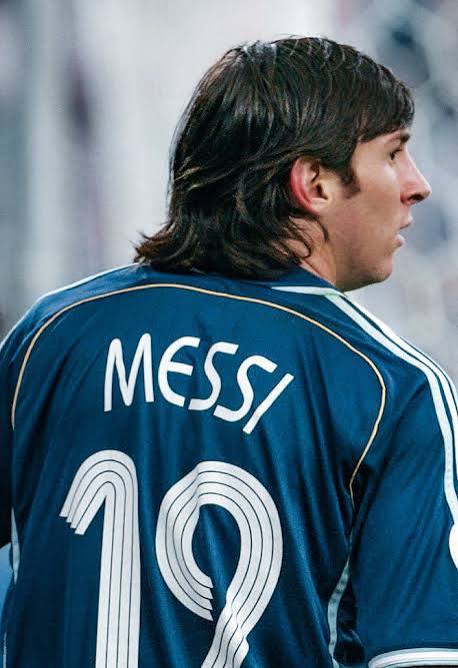
Lionel Messi is an Argentine footballer whose career combines extraordinary scoring with exceptional playmaking. His close control, passing accuracy and ability to recognise space have made him one of the most influential attacking players in football.
His story connects Rosario, Barcelona, Paris, Miami and Argentina’s national team. Each chapter offers a different perspective on a player capable of finishing an attack and creating the opportunity that starts it.
Understanding Messi requires looking beyond highlights. Goals, awards and trophies establish achievement, while his movement and decision-making explain how he influences a match.
Who Is Lionel Messi?
Messi was born in Rosario, Argentina, on 24 June 1987. Inter Miami’s official profile identifies him as a left-footed forward wearing number 10.
Although classified as a forward, he frequently contributes to the construction of attacks. He can receive away from the defensive line, carry the ball towards opponents and supply teammates moving into space.
| Detail | Information |
|---|---|
| Common names | Lionel Messi and Leo Messi. |
| Date of birth | 24 June 1987. |
| Birthplace | Rosario, Argentina. |
| Nationality | Argentine. |
| Preferred foot | Left. |
| Listed club | Inter Miami CF, checked on 8 October 2026. |
| Listed position | Forward. |
| Inter Miami shirt number | 10. |
Early Life and Football Development
Barcelona’s historical account records Messi’s youth football at Newell’s Old Boys before he joined Barcelona’s development system at 13. He progressed through youth and reserve football towards the first team.
This development matters because even remarkable talent needs opportunities to learn. Training and competition help a young player connect technique with positioning, teamwork and decisions made under pressure.
Messi’s football illustrates that connection. A controlled first touch creates time, an accurate pass keeps an attack moving, and an awareness of nearby defenders helps determine what should happen next.
What Young Players Can Learn from His Development
The practical lesson is to work on repeatable skills. Receiving, passing, protecting possession and understanding movement provide the foundation for more spectacular actions.
A successful dribble is useful when it improves the team’s position. An early pass can be equally valuable if it reaches a teammate before defenders recover.
Lionel Messi at Barcelona
Barcelona’s career summary credits Messi with 778 appearances, 672 goals and 35 trophies. These are figures for his Barcelona chapter, not his combined totals for every club and country.
His contribution involved more than completing chances. He could participate in the passing sequence, change the defensive shape and then become the player finishing the move.
This combination makes his Barcelona career especially interesting to study. Scoring and creation were connected parts of his attacking influence.
| Category | Figure | Scope |
|---|---|---|
| Appearances | 778 | Barcelona career summary. |
| Goals | 672 | Goals for Barcelona. |
| Trophies | 35 | Titles credited in the club’s summary. |
How He Made Defending More Difficult
Defenders facing a creative scorer must manage several threats. Stepping towards the ball can leave space behind. Holding position can allow the attacker to advance or shoot.
Messi’s ability to pass and dribble makes that choice harder. A small change in direction can create a shooting angle, while an approaching defender can open a route to a teammate.
Lionel Messi at Paris Saint-Germain
Messi’s PSG chapter ran from 2021 to 2023. The club’s farewell reporting credited him with 32 goals and 35 assists.
A new club changes the relationships around a player. Teammates have different movement patterns, and the player must identify where his contribution fits the attack.
When evaluating this period, consider its duration and tactical setting. Comparing a short chapter with a long career at another club requires more than placing totals side by side.
Lionel Messi and Inter Miami
Inter Miami announced Messi’s signing in 2023. The move introduced another competition environment and a new chapter in his professional career.
His performances can be studied through the same questions used elsewhere: where does he receive, which defenders move towards him, and how do teammates respond to his possession?
For current fixtures, availability and club totals, use dated official information. A player profile does not guarantee participation in a particular match.
| Club | Main Chapter | Useful Analytical Focus |
|---|---|---|
| Barcelona | Development and sustained first-team achievement. | Scoring, creation and long-term influence. |
| Paris Saint-Germain | 2021–2023. | Contribution within a different attacking structure. |
| Inter Miami | Joined in 2023. | Adaptation to a new team and competition. |
Lionel Messi’s Argentina Career
International football brought a different competitive rhythm. Major tournaments concentrate expectations into a limited number of matches, with less time to recover from mistakes.
Messi’s Argentina career includes Copa América victories in 2021 and 2024 and the 2022 World Cup triumph. These achievements connect his individual contribution with the success of the national team.
The team context remains essential. A title depends on several players performing their roles, effective coaching and execution across the tournament.
| Year | Achievement | Category |
|---|---|---|
| 2008 | Olympic gold. | Olympic football. |
| 2014 | World Cup Golden Ball. | Individual tournament recognition. |
| 2021 | Copa América champion. | Senior continental title. |
| 2022 | World Cup champion. | Senior global team title. |
| 2022 | World Cup Golden Ball. | Individual tournament recognition. |
| 2024 | Copa América champion. | Senior continental title. |
Why the 2022 World Cup Matters
Argentina’s victory in Qatar gave Messi a defining international achievement. FIFA records his World Cup triumph and Golden Ball award, and identifies him as the first player to receive that award twice.
The achievement matters without replacing the rest of his career. His club performances and sustained creativity already provided an extensive body of footballing work.
The World Cup added a major team success to that history and became a central moment in how supporters remember his Argentina journey.
Argentina Farewell in October 2026
FIFA and Inter Miami reported Messi’s final international appearance against Benin on 6 October 2026. Argentina won 3–0, with Messi scoring in the farewell match.
Lionel Messi’s Individual Awards and Records
UEFA’s record guide lists eight Ballon d’Or awards, six European Golden Shoes, 474 Spanish league goals and 129 Champions League goals.
Each figure measures a particular category. Competition goals should not be added to wider club totals because that would count the same goals more than once.
| Record or Achievement | Figure | Meaning |
|---|---|---|
| Ballon d’Or awards | 8 | Individual award wins. |
| European Golden Shoes | 6 | European league scoring distinctions. |
| Spanish league goals | 474 | League-specific goals. |
| Champions League goals | 129 | Competition-specific career goals. |
| 2011/12 Spanish league goals | 50 | One league season. |
| 2012 calendar-year goals | 91 | Club and Argentina scoring combined during that year. |
Understanding Lionel Messi’s Playing Style
Close Control
Close control preserves choices. Keeping the ball within reach allows a player to change direction, protect possession or pass before a defender completes a challenge.
When watching Messi dribble, notice the relationship between the touch and the defender’s movement. The useful action is often small rather than dramatic.
Changes of Pace
A slower approach can encourage a defender to settle into a position. Acceleration at the right moment changes the timing of the contest.
This is why dribbling analysis should consider rhythm as well as speed. The moment of acceleration can matter more than running quickly throughout.
Passing and Vision
A creative pass depends on recognising movement before the opportunity disappears. Messi’s playmaking can involve releasing the ball as a teammate begins a run, rather than waiting until the space is obvious.
Watch the seconds before the pass. The receiving player’s movement and the defender’s attention often explain why the ball reaches its target.
Finishing
A finish involves angle, timing and placement. The first touch may create the shot, while a brief delay can alter the goalkeeper’s position.
Studying preparation helps explain the goal more clearly than focusing only on the final contact with the ball.
| Skill | What to Observe | Effect |
|---|---|---|
| First touch | Direction of the ball after receiving. | Prepares the next action. |
| Close control | Distance between player and ball. | Preserves options under pressure. |
| Acceleration | Timing of the change in speed. | Disrupts the defender’s reaction. |
| Passing | Release relative to the teammate’s run. | Connects movement with opportunity. |
| Disguise | Body shape before the chosen action. | Complicates defensive decisions. |
| Finishing | Preparation, angle and placement. | Converts the available opening. |
Messi as a Scorer and Playmaker
Scoring and playmaking can support each other. A defender must respect the shooting threat, which can create an opportunity for a pass.
Similarly, a player known for passing can gain space when defenders anticipate the ball moving elsewhere. The uncertainty is valuable.
Messi’s football is especially interesting because these contributions can occur within the same possession. He may begin a move away from goal and finish it inside the penalty area.
| Contribution | Primary Action | Supporting Effect |
|---|---|---|
| Scoring threat | Preparing or taking a shot. | Draws attention towards the ball. |
| Playmaking | Supplying a teammate. | Uses space created by defensive movement. |
| Ball carrying | Advancing while retaining possession. | Changes the location of defensive pressure. |
| Combination play | Passing and receiving again. | Creates another route through the defence. |
How to Read Messi’s Career Statistics
Before comparing totals, check the team, competition and date. A Barcelona goal total is different from a league total and from combined club-and-country scoring.
Assists require particular care because providers can use different definitions. The final recorded assist also does not represent every meaningful creative action.
| Statistic | What It Describes | What It Does Not Establish |
|---|---|---|
| Goals | Recorded scoring actions. | The whole attacking contribution. |
| Assists | Final-pass contribution under the provider’s definition. | Every pass that helped create a goal. |
| Appearances | Matches counted by the source. | Equal minutes in every match. |
| Team trophies | Titles credited to the team or player. | An individual performance ranking. |
| Individual awards | Recognition under award criteria. | A complete measure of every skill. |
| Career totals | Accumulated figures to a stated cutoff. | A permanently current number. |
Lionel Messi and Football’s Greatest-Player Debate
Messi’s combination of scoring, creativity and sustained achievement gives him a substantial place in discussions of football greatness.
The final ranking depends on the criteria. Some observers prioritise individual ability, others longevity, international performance or influence on a team.
A productive comparison explains those priorities and recognises differences between eras, roles and competitions. Personal preference should remain distinguishable from a verified record.
What Young Players Can Practise
Observe the simple actions that support the spectacular ones. An accurate first touch and a useful passing angle can improve an attack without a complicated skill.
Practise under appropriate coaching and progress gradually. The aim is to improve decisions and execution, rather than reproduce a highlight without understanding its purpose.
| Match Detail | Practice Focus | Objective |
|---|---|---|
| Checking space before receiving. | Awareness exercises. | Know the options earlier. |
| Receiving away from pressure. | First-touch practice. | Prepare a controlled next action. |
| Passing into a useful position. | Accuracy and weight of pass. | Help the teammate continue. |
| Moving after a pass. | Combination exercises. | Create another option. |
| Choosing when to dribble. | Small-sided decision-making. | Use possession effectively. |
Salary, Endorsements and Personal Wealth
Messi’s sporting achievements and financial profile require different evidence. A contract, endorsement estimate and personal net worth measure different things.
Annual income should not be presented as accumulated wealth. A commercial partnership should not be assigned a value unless that figure has a reliable, dated source.
This biography does not assign a current salary or net worth. Readers assessing a financial claim should check its year, currency and definition.
Frequently Asked Questions
Where is Lionel Messi from?
He is from Rosario, Argentina.
When was Lionel Messi born?
He was born on 24 June 1987.
Which foot does Messi prefer?
His official Inter Miami profile lists him as left-footed.
How many goals did Messi score for Barcelona?
Barcelona’s career summary credits him with 672 goals.
How many Ballon d’Or awards has he won?
UEFA’s published record guide lists eight.
Did Messi win the World Cup?
Yes. He won the 2022 World Cup with Argentina.
What is the difference between the Ballon d’Or and Golden Ball?
The Ballon d’Or is a major individual football award. The World Cup Golden Ball recognises the outstanding player at that tournament.
Why do websites sometimes show different totals?
They may use different dates, competitions, match categories or statistical definitions.
Is international retirement the same as club retirement?
No. They concern different parts of a player’s career.
What makes Messi influential beyond his goals?
His passing, dribbling and movement can create opportunities for teammates and change defensive positioning.
Sources and Further Reading
- Inter Miami: Official Messi Profile
- Barcelona: Historical Career Profile
- PSG: Messi Farewell Report
- UEFA: Messi Records
- FIFA: World Cup Golden Ball
- CONMEBOL: Argentina Career
- Inter Miami: International Farewell
Source reference date: 8 October 2026. Historical statistics retain their stated scope. Club figures and availability can change. Playing-style sections provide editorial analysis.