
Why Support Education in Tanzania?
Tanzania has made significant progress in expanding access to education, but many children and adolescents still face barriers that can prevent them from attending or completing school.
UNICEF currently estimates that approximately 3.2 million children between the ages of 7 and 17 are out of school, including around 1.2 million who have never attended.
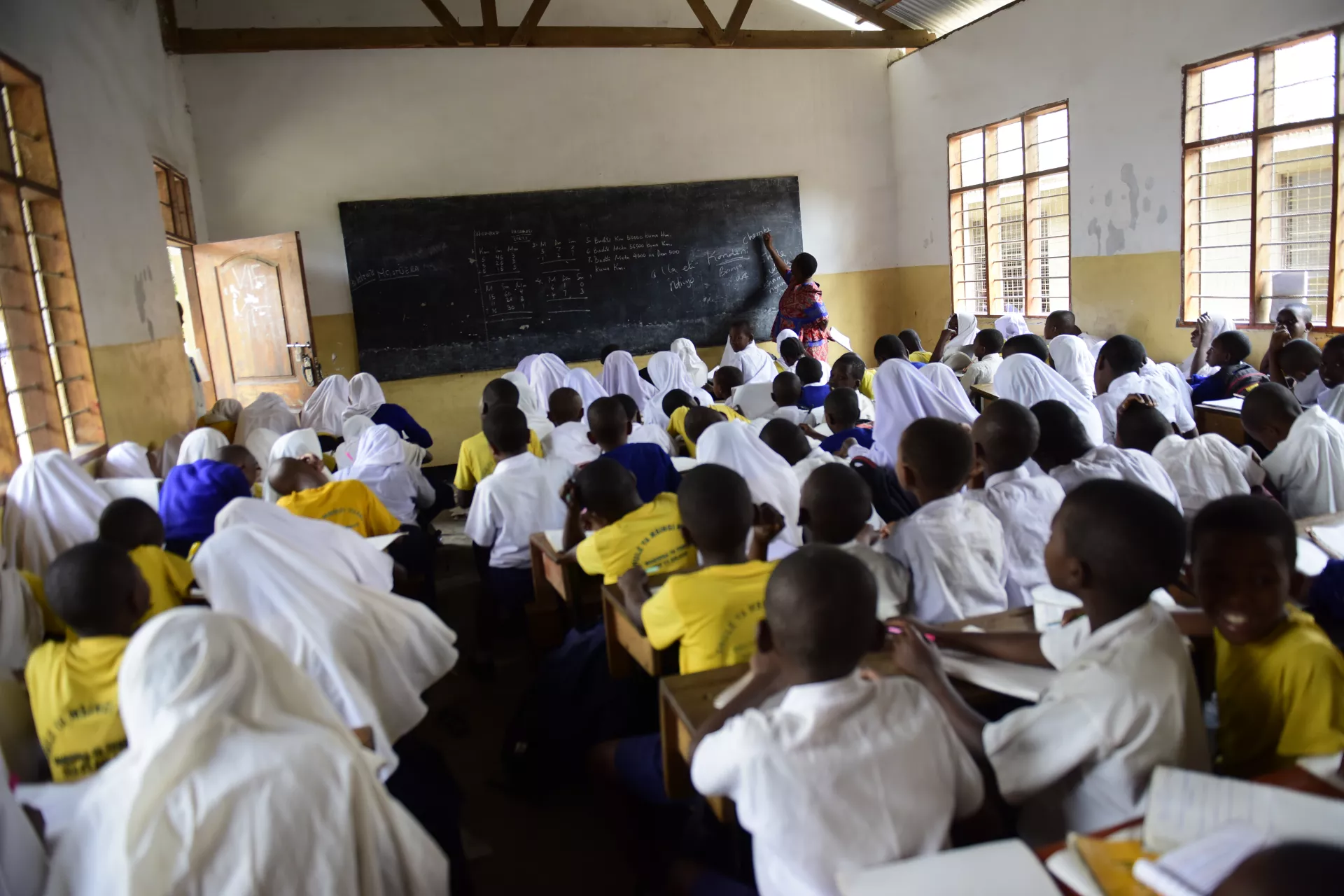
Challenges can include poverty, distance to school, inadequate learning facilities, teacher shortages, disability-related barriers, limited water and sanitation and social barriers affecting adolescent girls.
Education Challenges in Tanzania
Ways to Support Education in Tanzania
Classrooms, toilets, clean water, accessible facilities and safe learning spaces can improve educational access and learning conditions.
Teacher training, professional development and appropriate learning resources can help improve classroom teaching and student learning.
Textbooks, reading resources, educational materials and appropriate digital tools can support teaching and independent learning.
Safe schools, appropriate sanitation, menstrual hygiene support and community engagement can help remove barriers that disproportionately affect girls.
Learners with disabilities may need accessible infrastructure, appropriate materials and trained teachers to participate fully in education.
Flexible and alternative learning programs can help children and adolescents return to education after interruptions or long periods outside school.
BOOST Primary Student Learning Program
Tanzania's Ministry of Education is implementing the BOOST Primary Student Learning Program to strengthen pre-primary and primary education.
The programme supports classrooms, toilets and school facilities, teaching and learning materials, teacher professional development, ICT, safe schools and stronger education management.
BOOST also encourages communities to participate in developing school infrastructure.
Supporting Teachers in Tanzania
Quality education depends heavily on teachers.
Supporting teachers can include continuous professional development, teaching materials, mentoring and access to professional learning resources.
Tanzania's Ministry of Education currently has programmes designed specifically to strengthen the teaching profession at primary and secondary levels.
Learning Materials and School Supplies
A school building alone does not guarantee quality learning.
Teachers and students also need appropriate textbooks, reading materials, science resources, classroom teaching aids and other educational materials.
Effective support should be aligned with the national curriculum and the actual needs identified by the school.
Supporting Girls' Education in Tanzania
Girls can face specific barriers to continuing education, particularly during adolescence.
UNICEF identifies inadequate WASH facilities, menstruation and child marriage among factors that can contribute to higher dropout rates among vulnerable girls.
Support can include safe toilets, water, menstrual hygiene facilities, community engagement and initiatives designed to help girls stay in or return to school.
Clean Water, Sanitation and Hygiene in Schools
Water and sanitation are important parts of an effective education system.
Schools need reliable water for drinking, handwashing, toilets, cleaning and general hygiene.
Tanzania's 2026 WASH reporting highlights continuing inequalities in water, sanitation and menstrual hygiene services, demonstrating why school WASH remains an important area of education support.
School Meals and Nutrition
Hunger can make it difficult for a child to concentrate, participate or remain in school.
School meal programs can therefore complement education support, particularly in communities experiencing economic hardship or food insecurity.
UNICEF documented in Kigoma in 2026 how access to a daily nutritious school meal helped support the return and participation of vulnerable learners.
Digital Learning in Tanzania
Technology is creating additional ways to support students, including children who cannot easily access traditional classroom education.
In 2026, UNICEF's Learning Pioneers initiative began testing the Enuma School application in Tanzania to support out-of-school adolescents with foundational English literacy and numeracy.
The pilot uses tablets with educational activities that can work offline, making the model relevant in areas where continuous internet access cannot be assumed.
Supporting Out-of-School Children
Some children leave school because of poverty, long distances, family circumstances or other barriers.
Returning these learners to education may require more than traditional classroom enrolment.
Tanzania, UNICEF and Education Above All have implemented a multi-year programme aimed at increasing equitable access to quality primary education for out-of-school children in regions including Kigoma, Tabora and Songwe.
Distance as a Barrier to Education
Distance can be a serious education barrier in rural communities.
UNICEF documented a 2026 example from Nyenjele in Songwe where some children were travelling as far as 12 kilometres to reach school and another 12 kilometres to return home.
School expansion, community learning centres and appropriate transport solutions can help reduce geographic barriers.
Education Support Areas in Tanzania
| Support Area | Examples | Potential Benefit |
|---|---|---|
| School Infrastructure | Classrooms, toilets, water and accessible buildings | Safer and more appropriate learning environments |
| Teacher Development | Training, mentoring and teaching resources | Improved teaching quality |
| Learning Materials | Textbooks, reading materials and classroom aids | Better access to curriculum resources |
| Girls' Education | WASH, menstrual hygiene and retention support | Improved participation and completion |
| Inclusive Education | Accessible facilities and specialized support | Greater participation by learners with disabilities |
| School Meals | Nutritious meals and school nutrition programs | Better participation and readiness to learn |
| Digital Learning | Tablets, offline learning and ICT resources | Additional learning pathways |
Inclusive Education and Children With Disabilities
Education support should consider children with different physical, sensory and learning needs.
Inclusive infrastructure can include ramps, accessible toilets, appropriate classroom layouts and learning materials adapted to specific needs.
Teacher development is also important so educators have practical skills for supporting diverse learners.
Community Participation in Education
Education projects are often more sustainable when parents, school committees, teachers and local leaders are involved.
Communities can help identify needs, monitor projects and support the long-term maintenance of school infrastructure.
Community participation is also explicitly included in Tanzania's BOOST education programme.
How to Support Education Responsibly
Ask schools and local education authorities what resources are actually needed before providing support.
Education projects should complement Tanzania's existing schools, curriculum and government systems.
Consider maintenance, teacher capacity and recurring costs rather than focusing only on initial donations.
Programs should consider girls, children with disabilities and other learners facing barriers.
Successful education programs should consider whether children are actually learning, not just whether they are enrolled.
Organizations should provide clear information about program goals, budgets and how resources are used.
Education Access vs Quality Education
Enrolment is important, but being inside a classroom does not automatically mean a child is learning at the expected level.
UNICEF notes that rapid expansion of enrolment has created pressure on teacher-to-student ratios and other education resources.
This means effective education support should address both access and learning quality.
How Education Support Can Create Long-Term Impact
Teachers, learning resources and effective classrooms can help children build foundational skills.
Education can help young people develop skills needed for further study, employment and entrepreneurship.
Educated young people can contribute knowledge and skills to families, businesses and community development.
Support Education in Tanzania – Frequently Asked Questions
How can I support education in Tanzania?
Education can be supported through school infrastructure, teacher development, learning materials, inclusive education, school WASH, nutrition and programs for vulnerable or out-of-school learners.
How many children are out of school in Tanzania?
UNICEF currently estimates approximately 3.2 million children aged 7–17 are out of school, including around 1.2 million who have never attended.
Why is teacher training important?
Teacher development can improve classroom methods, subject knowledge and educators' ability to support students with different learning needs.
How can girls' education be supported?
Support can include safe schools, appropriate WASH and menstrual hygiene facilities, retention programmes and community initiatives that reduce barriers to attendance.
Why are school meals important?
Appropriate school nutrition programmes can help learners who face food insecurity arrive better prepared to participate in school.
Can digital learning help Tanzanian students?
Yes. Digital tools can complement traditional learning, including offline approaches for communities where continuous internet access is unavailable.
What is BOOST in Tanzania?
BOOST is the Boost Primary Student Learning Program. It supports pre-primary and primary education through school infrastructure, teaching materials, teacher development, ICT, safe schools and education management.
What should an education charity focus on?
Strong programs identify local needs and support access, learning quality, teachers, inclusion and sustainable school systems rather than relying only on one-time donations.
Supporting a Better Education Future in Tanzania
Supporting education in Tanzania can create lasting impact when children have access not only to schools but also to qualified teachers, learning resources, clean water, safe facilities and inclusive opportunities.
Infrastructure, teacher development, girls' education, nutrition, digital learning and support for out-of-school children are all interconnected parts of stronger education systems.
Sustainable education initiatives work alongside schools, communities and Tanzanian education institutions so that improvements can benefit learners for many years.