
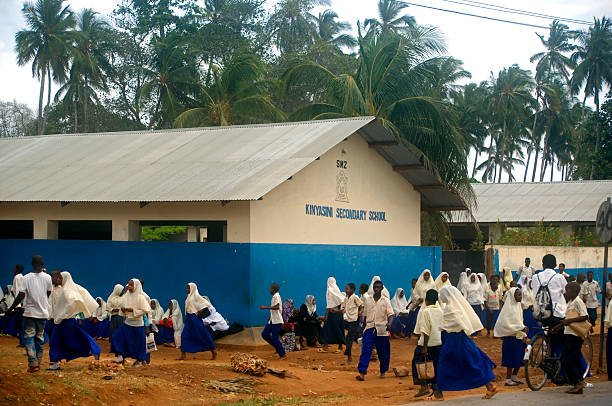
Why Build Schools in Tanzania?
Tanzania has expanded access to education over many years, increasing demand for classrooms, teachers and school infrastructure.
In communities experiencing rapid enrolment growth, overcrowded classrooms and limited facilities can affect the quality of the learning environment.
Building and improving schools can therefore help create safer, more comfortable and more inclusive places where children can learn.
What Does a School Construction Project Include?
Classrooms should provide adequate learning space, ventilation, lighting and protection from weather.
Safe toilets, handwashing points and reliable water supplies are important parts of a healthy school environment.
Desks, chairs, storage and teacher furniture help make new classrooms functional once construction is completed.
Teachers' offices, staffrooms and, where appropriate, teacher housing can support the delivery of education, particularly in remote areas.
Schools may require piped water, boreholes, storage, grid electricity or solar systems depending on the location.
Accessibility features can help ensure that children with disabilities can use classrooms, toilets and other school facilities safely.
School Infrastructure Development in Tanzania
Tanzania's Ministry of Education is currently expanding infrastructure through programmes including the Boost Primary Student Learning Program, known as BOOST.
The programme supports construction and improvement of classrooms, toilets and other facilities for pre-primary and primary schools in areas experiencing high demand.
It also promotes community participation in construction, safer school environments, digital learning and improved education management.
Building New Schools vs Improving Existing Schools
Not every community requires an entirely new school.
In many locations, expanding or rehabilitating an existing school can provide additional classrooms and facilities more efficiently.
Ministry of Education programmes support both approaches, including construction, rehabilitation and completion of existing structures.
Essential School Infrastructure
| Infrastructure | Purpose |
|---|---|
| Classrooms | Provide safe and appropriate spaces for teaching and learning. |
| School Toilets | Support sanitation, privacy and student health. |
| Water Supply | Supports drinking, handwashing, cleaning and sanitation. |
| Desks & Furniture | Make classrooms usable and support learning. |
| Teacher Offices | Provide space for preparation, administration and staff activities. |
| Science Laboratories | Support practical science learning, particularly in secondary schools. |
| Electricity / Solar | Supports lighting, digital learning and school administration. |
| Accessible Facilities | Improve participation for learners with disabilities. |
Building Classrooms in Tanzania
Classroom construction is one of the most visible forms of education infrastructure development.
Additional classrooms can reduce pressure on overcrowded schools and create more suitable teaching environments.
Construction should consider safety, ventilation, natural lighting, accessibility and the number of learners expected to use each space.
School Toilets, Water and Hygiene
A new classroom alone does not create a complete school. Students also need safe water, sanitation and hygiene facilities.
UNICEF's work in Tanzania demonstrates the importance of combining education infrastructure with WASH facilities, including toilets, running water and handwashing stations.
In Zanzibar, UNICEF and Education Above All constructed 23 toilet blocks containing 190 cubicles and installed water systems and handwashing facilities in 13 schools during a 2024 project.
School Infrastructure and Girls' Education
Safe and private sanitation facilities can be particularly important for adolescent girls.
Toilets should provide privacy, running water where feasible and appropriate facilities for menstrual hygiene management.
UNICEF has documented cases in Tanzania where improved school WASH facilities helped remove barriers that had previously contributed to girls missing school during menstruation.
Building Secondary Schools in Tanzania
Secondary schools require additional types of infrastructure beyond standard classrooms.
Tanzania's Secondary Education Development Programme identifies classrooms, science laboratories, teachers' residences, latrines, water supply and electricity as important infrastructure components.
Electricity may be supplied through the national grid or solar systems depending on local conditions.
Community Participation in School Construction
Community participation can help ensure that a school project responds to genuine local needs.
Parents, local leaders, school committees and government authorities can contribute to planning, monitoring and long-term care of school infrastructure.
Tanzania's BOOST programme specifically includes community participation in school infrastructure development through the Force Account approach.
How a School Construction Project Can Be Planned
Determine whether the community needs a new school, additional classrooms or rehabilitation of existing facilities.
Work with relevant education and local-government authorities before starting construction.
Consider land, drainage, road access, water, environmental conditions and future expansion.
Include classrooms, toilets, water, accessibility and other facilities needed for the intended education level.
Construction should be appropriately supervised to meet approved technical and safety standards.
Establish responsibilities and funding for repairs, cleaning, water systems and long-term maintenance.
Building Schools in Rural Tanzania
Rural school projects may face different challenges from schools in major urban areas.
Long distances, limited electricity, water availability, transport and teacher accommodation may all influence infrastructure design.
Solar electricity, rainwater harvesting, teacher housing and locally appropriate construction can therefore become important parts of rural school planning.
Why School Infrastructure Matters
Safe, adequately sized classrooms provide more appropriate spaces for teaching and learning.
Water, toilets and handwashing facilities help create healthier school environments.
Building schools closer to underserved communities can reduce physical barriers to education.
School Maintenance and Sustainability
A school project should include a plan for maintaining buildings after construction.
Roofs, windows, toilets, water systems, solar equipment, desks and other facilities will require repairs and replacement over time.
School committees, local authorities and communities therefore need clear responsibilities for inspection, maintenance and budgeting.
Ways to Support School Development in Tanzania
Support construction or rehabilitation where enrolment exceeds available learning space.
Improve toilets, clean-water access, handwashing and menstrual hygiene facilities.
Support desks, laboratories, teacher facilities, accessibility and appropriate learning infrastructure.
Supporting School Projects Responsibly
Before supporting a school construction project, verify who owns the land, which authority has approved the project and whether the design meets relevant education and building requirements.
Donations and construction funding should be transparent and connected to a clear project budget, implementation plan and maintenance strategy.
Projects should also involve local communities rather than constructing facilities without local planning or ownership.
Build Schools in Tanzania – Frequently Asked Questions
Why are new schools needed in Tanzania?
Population growth and increased school enrolment can create demand for additional classrooms and facilities, particularly in rapidly growing and underserved areas.
What should be included when building a school?
Depending on the school level, facilities can include classrooms, toilets, water, desks, teacher offices, electricity, laboratories, accessibility features and safe outdoor spaces.
Are school toilets important?
Yes. Safe sanitation, water and handwashing facilities support hygiene, student health and a more appropriate learning environment.
Why do schools need clean water?
Water is required for drinking, handwashing, cleaning, toilets and general school hygiene.
Can solar power be used in Tanzanian schools?
Yes. Tanzania's education infrastructure programmes recognize both grid and solar electricity as options, particularly where grid access is limited.
How can communities participate in school construction?
Communities can participate through planning, school committees, local oversight and approved government community-construction approaches.
Is it better to build a new school or expand an existing one?
It depends on local demand, distance to existing schools, available land and the condition and capacity of current facilities. A needs assessment should determine the appropriate option.
What is BOOST in Tanzania?
BOOST is the Boost Primary Student Learning Program, a Ministry of Education programme supporting pre-primary and primary education, including classrooms, toilets and other school infrastructure.
Building Better Schools for Tanzania's Future
Building schools in Tanzania can improve access to education when projects create safe, inclusive and sustainable learning environments.
Classrooms are important, but effective school infrastructure also requires toilets, clean water, furniture, teacher facilities, electricity and accessibility.
Long-term success depends on careful planning, government coordination, community participation, quality construction and ongoing maintenance so that school facilities can serve learners for many years.