
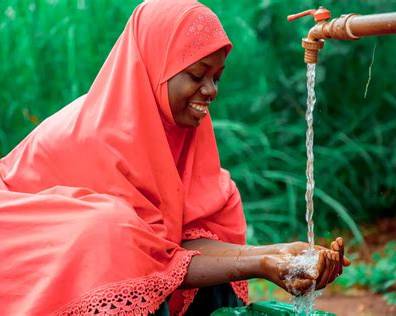
What Are Clean Water Projects in Tanzania?
Clean water projects are initiatives designed to improve access to safe, reliable and sustainable water supplies for households, schools, health facilities and communities.
Projects can range from small village water points to larger piped networks serving several communities.
Rural projects often combine infrastructure construction with community training so local organizations can operate, maintain and financially manage the water system after construction is complete.
Clean Water Progress in Tanzania
Tanzania has implemented large-scale rural water and sanitation programs involving government institutions, communities and development partners.
Recent World Bank results show millions of Tanzanians have gained access to improved water and sanitation services through the Sustainable Rural Water Supply and Sanitation Program.
Types of Clean Water Projects in Tanzania
Boreholes can provide access to groundwater in communities where reliable surface-water sources are unavailable.
Projects should include appropriate groundwater assessment, water-quality testing and a maintenance plan.
Solar pumps can move groundwater into storage tanks and distribution systems without depending entirely on grid electricity or fuel-powered pumps.
These systems can be especially useful in rural locations with strong solar resources.
Piped systems can distribute water from a protected source to community water points, institutions or individual household connections.
Rainwater can be collected from roofs and stored for appropriate uses, particularly at schools, households and public institutions.
School projects combine reliable water with sanitation, handwashing infrastructure and hygiene education.
Reliable water and sanitation are essential for hygiene, infection prevention, maternity services and safe healthcare delivery.
RUWASA and Rural Water Supply in Tanzania
The Rural Water Supply and Sanitation Agency, known as RUWASA, is responsible for rural water and sanitation development in Mainland Tanzania.
Its responsibilities include planning and designing water projects, construction and rehabilitation of infrastructure, technical support and supervision of community water organizations.
RUWASA also supports the development of groundwater sources through exploration, borehole drilling and construction of water-storage infrastructure.
Solar-Powered Clean Water Projects
Solar energy has become an important option for rural water systems where conventional electricity may be unavailable, costly or unreliable.
Solar panels can power pumps that draw groundwater and move it into elevated storage tanks. Gravity can then distribute the water to community taps or household connections.
UNICEF has documented solar-powered groundwater projects in Tanzania's Kigoma Region implemented with partners such as the Grundfos Foundation and Water Mission.
These systems have helped communities replace long journeys to distant or unreliable sources with more convenient access to clean water.
Example: Clean Water Projects in Kigoma
Communities in parts of Kigoma historically faced significant difficulties accessing safe water.
UNICEF documented households where women and children had travelled long distances to obtain water, sometimes relying on sources that could be contaminated.
Partnerships involving UNICEF, Water Mission and the Grundfos Foundation introduced groundwater pumping systems powered by solar energy and community water-dispensing technology.
These projects demonstrate how clean-water infrastructure can simultaneously improve health, education and household time.
Community-Based Water Supply Organizations
Constructing infrastructure is only the beginning of a successful rural water project.
Tanzania uses Community-Based Water Supply Organizations, commonly known as CBWSOs, to help operate and maintain many rural water schemes.
These organizations can collect service revenue, maintain infrastructure, manage local water points and expand household connections.
Training in technical operations, financial management and governance can help keep water systems functioning over the long term.
How Community Management Can Expand Water Access
In northern Tanzania, the World Bank documented the Kimwiche Community-Based Water Supply Organization serving Kiperesa, Mwitikira and Chekanao villages.
After taking over the local scheme with only five water points, the organization used service revenue to add 75 additional water points across the three villages.
This example illustrates why local management and maintenance are central to sustainable clean-water projects.
Benefits of Clean Water Projects
Safe water, sanitation and hygiene can reduce exposure to diseases associated with contaminated water and inadequate sanitation.
When water is available closer to communities, children may spend less time collecting it and more time attending school.
Reliable water can reduce time spent collecting water and support households, agriculture and small businesses.
Clean Water Projects and Women in Tanzania
Women and girls can be disproportionately affected when water must be collected far from the household.
Long journeys for water can reduce time available for school, paid work, farming and other activities.
Bringing reliable water closer to homes can therefore provide benefits that extend beyond health.
Clean Water Projects for Schools
Schools require adequate water for drinking, toilets, handwashing, food preparation and general hygiene.
Effective school WASH projects normally combine water supply with sanitation facilities and hygiene education rather than focusing on taps alone.
Access to appropriate WASH facilities is also important for menstrual hygiene management and creating supportive learning environments for girls.
Clean Water for Health Facilities
Water is essential in hospitals, health centres and dispensaries.
Healthcare workers need reliable supplies for handwashing, cleaning, infection prevention, maternity care and sanitation.
Clean-water projects that serve healthcare facilities can therefore contribute directly to safer medical services.
What Makes a Sustainable Water Project?
| Project Component | Purpose |
|---|---|
| Water Source Assessment | Determines whether a source can provide sufficient and sustainable water. |
| Water Quality Testing | Helps determine whether water is suitable for its intended use. |
| Pumping System | Moves water from the source into storage or distribution infrastructure. |
| Storage Tanks | Store water and help maintain a more reliable supply. |
| Distribution Network | Carries water to taps, institutions or homes. |
| Community Management | Supports operation, maintenance and financial sustainability. |
| Sanitation & Hygiene | Helps ensure water improvements produce wider public-health benefits. |
How Clean Water Projects Are Developed
Understand population needs, existing water sources and current service challenges.
Evaluate suitable water sources and determine the infrastructure required.
Design pumping, storage, distribution and sanitation components appropriate for the location.
Build and test infrastructure under appropriate technical supervision.
Train local operators and water organizations in maintenance, governance and financial management.
Monitor water quality, system functionality and maintenance requirements.
Challenges Facing Water Projects in Tanzania
Water projects can face technical, environmental and financial challenges.
- Distance between communities and reliable water sources.
- Seasonal variation in water availability.
- Climate-related pressure on water resources.
- Costs of repairing pumps and distribution systems.
- Population growth increasing demand.
- Need for reliable water-quality monitoring.
- Long-term funding for maintenance.
UNICEF and WASH in Tanzania
UNICEF supports Tanzania in expanding water, sanitation and hygiene services for children, adolescents and families, particularly vulnerable communities.
Its work includes WASH in households, schools and healthcare facilities together with government and development partners.
UNICEF's 2026 Tanzania WASH reporting also highlights remaining inequalities in access and the connections between water, sanitation, nutrition, health, education and child development.
How Clean Water Projects Can Be Supported
Resources can support construction and rehabilitation of boreholes, pumps, storage and distribution systems.
Long-term funding and technical capacity are essential to keep infrastructure functioning after construction.
Strong local management can improve accountability, maintenance and sustainability of rural schemes.
Clean Water Projects Tanzania – Frequently Asked Questions
What are clean water projects in Tanzania?
They are projects designed to improve access to safe and reliable water through infrastructure such as boreholes, solar pumps, piped systems, storage tanks and protected water sources.
What is RUWASA?
RUWASA is Tanzania's Rural Water Supply and Sanitation Agency. It plans, develops, supervises and supports rural water and sanitation services in Mainland Tanzania.
Are solar water pumps used in Tanzania?
Yes. Solar-powered groundwater systems are used in some rural projects and can provide an alternative to grid-electricity or fuel-powered pumping.
Why are boreholes important in rural Tanzania?
Boreholes can provide groundwater where surface sources are distant, unreliable or unsuitable, provided the source is technically appropriate and water quality is monitored.
Who maintains rural water projects?
Many schemes involve Community-Based Water Supply Organizations working with RUWASA and local authorities to manage operations and maintenance.
How do clean water projects help schools?
Reliable water supports drinking, sanitation, handwashing, hygiene and a healthier learning environment.
Why is water important in health facilities?
Water is essential for hygiene, infection prevention, cleaning, maternity services and safe healthcare delivery.
How many people have benefited from major rural water projects?
World Bank reporting indicates that approximately 7.9 million people have gained access to improved water supply through Tanzania's Sustainable Rural Water Supply and Sanitation Program.
Building Sustainable Clean Water Systems in Tanzania
Clean water projects can transform communities when reliable infrastructure is combined with water quality, sanitation, maintenance and strong local management.
Boreholes, solar-powered systems, piped networks, rainwater harvesting and WASH improvements in schools and healthcare facilities are all important parts of Tanzania's water-development landscape.
Sustainable progress depends not only on constructing new systems but also on ensuring that communities have the technical, financial and institutional capacity to keep safe water flowing for years to come.